

What Is an Altar? A Legal Meeting Point Between Heaven and Earth
An altar is a spiritual meeting point between heaven and earth.
It is a place of exchange, where spiritual authority is invoked, covenants are enacted and decisions are ratified in the spirit realm.
What decisions, habits or commitments currently hold the greatest authority in your life?

In biblical terms, an altar is not merely a physical structure. It is a legal and spiritual platform upon which:
- Vows are made
- Sacrifices are presented
- Covenants are established
- Spiritual transactions occur
Altars in Biblical and Historical Context
Throughout Scripture and ancient history, altars were understood as points of divine-human engagement, not decorative objects.
In the Old Testament, figures such as Noah, Abraham, Isaac, Jacob and Moses raised altars to mark:
- Covenantal encounters,
- Territorial claims,
- Divine instruction,
- Moments of transition.
Across ancient cultures, altars also functioned as legal-spiritual structures; places where oaths were sworn, agreements sealed and authority invoked. What distinguished biblical altars was not their existence, but who governed them.
This context explains why Scripture treats altars with gravity: they are not symbolic gestures, but authoritative spiritual operations.
Every altar authorises something.

When an altar is raised, it speaks.
When it is attended to, it continues to speak.
When it is neglected, something else may answer in its place.
Altars function as gateways or access point.
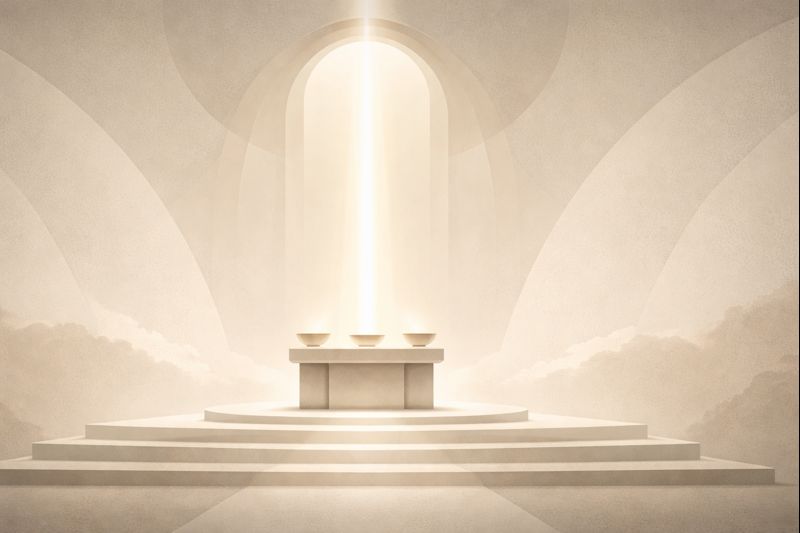
What is authorised at the altar gains legitimacy to operate within a life, family or territory. They give access, legitimacy and permission within the spiritual order.
What currently holds the greatest authority in your decision-making and how consistently is it being fed?
Throughout Scripture and ancient history, altars were understood as points of divine-human engagement, not religious decorations.
In the Old Testament, figures such as Noah, Abraham, Isaac, Jacob and Moses raised altars to mark:
- Covenantal encounters
- Territorial claims
- Divine instructions
- Moments of transition
In ancient cultures more broadly, altars also existed as legal-spiritual structures; places where oaths were sworn, agreements sealed, and authority invoked. This understanding was not unique to Israel; what distinguished biblical altars was who governed them.
This context reveals why Scripture treats altars seriously:
they are not symbolic acts, but authoritative spiritual operations.
What an Altar Is Not: Separating Essence from Expression

An altar is not:
- A decorative object
- A religious symbol
- A mystical ornament
- A cultural tradition
An altar is not defined by candles, tables or physical arrangement, those are expressions, not the essence.
Have you ever confused external spiritual activity with true spiritual allegiance?
You can remove physical objects and still have an altar operating in your life. Likewise, you can arrange objects and have no true altar at all.

This distinction is critical.
An altar exists wherever:
- Allegiance is offered
- Loyalty is pledged
- Obedience is rendered
- Sacrifice is consistently made
In other words, what you consistently give yourself to becomes an altar.
Modern Expressions of Altars (Real-Life Examples)
Altars are not confined to ancient history. They continue to operate wherever sustained devotion and allegiance exist.
Examples include:
- Career as an altar: when time, health, relationships, and conscience are repeatedly sacrificed for success or status.
- Money as an altar: when security, identity or peace is sourced primarily from financial accumulation.
- Relationships as altars: when loyalty to a person overrides obedience to God.
- Godly altars: when time, obedience, resources and decisions are consciously yielded to God’s authority.
These examples reveal a sobering truth: everyone has altars. The question is which authority governs them?
Which altar currently receives your most consistent sacrifice?
Altars, Vows and Covenants: The Legal Architecture of the Spirit Realm

Altars are covenantal by nature.
Nothing is brought to an altar casually.
On an altar, people present:
- Vows (spoken or unspoken commitments)
- Covenants (binding agreements)
- Sacrifices (time, obedience, substance or devotion)
Every covenant requires:
- A witness
- A legal basis
- An enforcing authority
That enforcing authority is what governs the altar.
This is why altars carry power both righteous and destructive depending on who the altar is raised to and what is placed upon it.
Are there commitments you are still standing on that you never consciously chose?
Engaging with Altars Wisely
Engaging with an altar does not begin with objects, it begins with awareness and alignment.
Practical steps include:
- Identify existing altars in your life by examining where your time, obedience and sacrifice consistently go.
- Examine covenants (spoken or unspoken) that may still be governing your decisions.
- Be intentional with devotion by recognising that consistency gives authority.
- Align allegiance consciously, rather than passively inheriting spiritual positions.
Altars respond to intentional stewardship, not accidental activity.
Why This Definition Matters: How Altars Shape Spiritual Outcomes Matters?

Many people struggle spiritually not because they lack prayer, but because: they misunderstand altars, they are feeding the wrong altar, or they are standing on covenants they never consciously entered.
Understanding altars is not advanced theology, it is spiritual literacy.
It clarifies why certain patterns persist, why some outcomes repeat and why alignment, not effort determines authority.
An altar does not need to be built to exist. It only needs to be fed.
What you feed determines what governs.
A Closing Prayer of Alignment
Heavenly Father,
I acknowledge that every altar carries authority and that what I consistently give myself to speaks in the spirit.
I ask for clarity to recognise the altars operating in my life and wisdom to discern the covenants that govern my decisions.
Where my allegiance has been divided, bring alignment. Where I have fed what I did not intend, bring correction. Where covenants were entered unknowingly, bring light and order.
I choose to yield my time, obedience and devotion to your authority alone.
Let every altar in my life speak righteousness and let what governs me reflect your will in Jesus’ name. Amen.
 sarahraholu.com
Leave a comment